Rescue and Rehoming Guardian Dogs
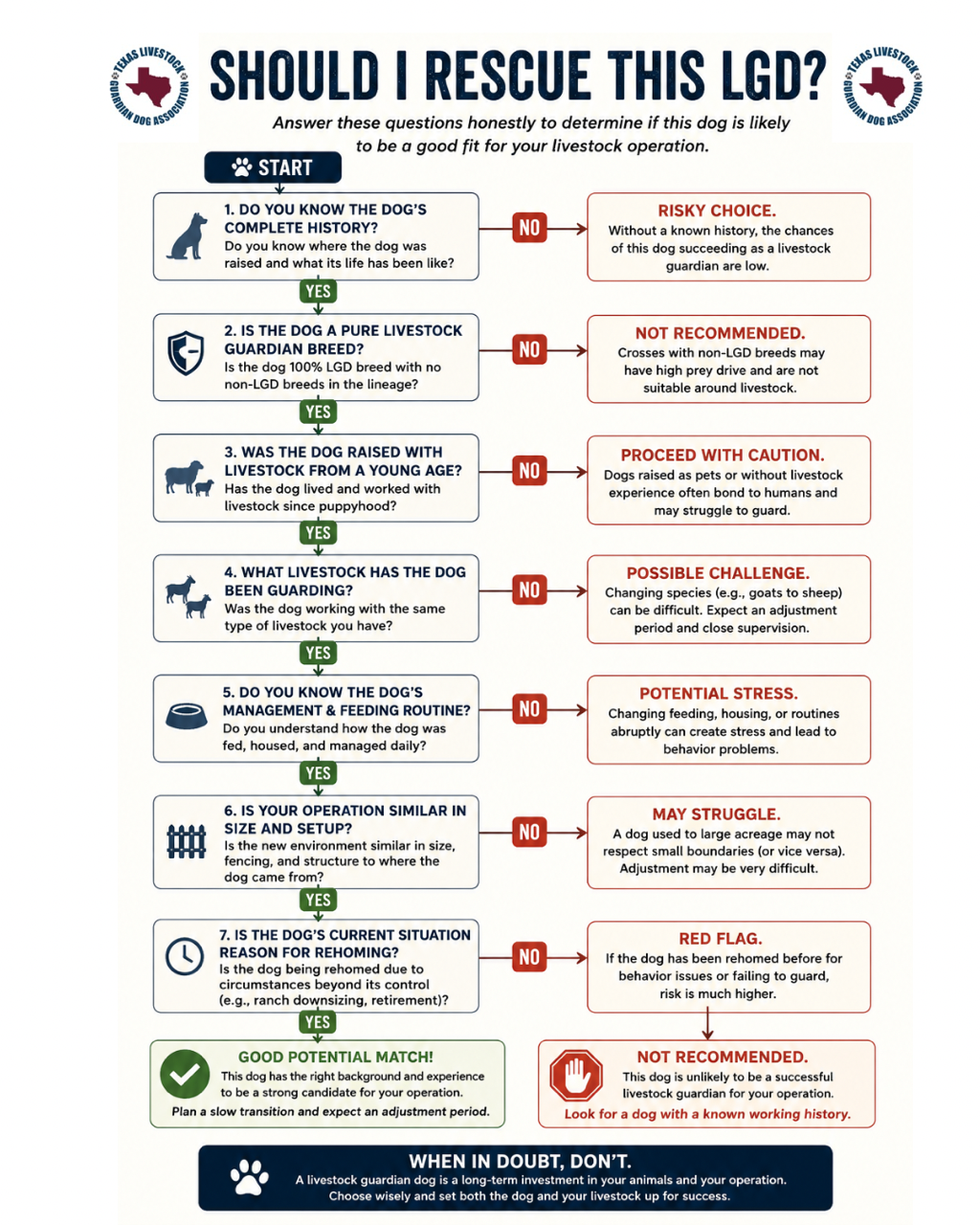
The Texas LGD Association recognizes and respects the significant challenges faced by LGD rescue organizations, producers, and individuals working to place LGDs in appropriate homes. We understand that many LGDs across Texas and the United States need rehoming due to operational changes, management challenges, or mismatched placements.
At this time, however, the Texas LGD Association does not operate a rescue program and cannot assist with the intake, placement, or rehoming of livestock guardian dogs. The Association does not evaluate individual dogs, coordinate transfers, provide foster placements, or maintain a list of dogs available for adoption.
Recommended Rehoming Options
While the Association cannot directly assist with rehoming, individuals seeking to place or acquire an LGD are encouraged to explore the following options:
- Livestock guardian dog–specific groups on social media platforms
- Regional or breed-specific working dog groups
- Producer and ranching networks familiar with LGD management
- Local agricultural and livestock-focused online communities
When using social media or informal networks, we strongly encourage careful screening of potential placements to ensure dogs are placed in environments appropriate for livestock guardian work, with experienced handlers and suitable livestock.
Important Considerations
Livestock guardian dogs are specialized working animals that require proper management, bonding, and long-term commitment. Rehoming should always prioritize the dog’s welfare, the safety of livestock, and the suitability of the receiving operation.
The Texas LGD Association remains committed to education, prevention, and improved management practices to reduce the likelihood that LGDs need rehoming in the first place through better placement decisions, realistic expectations, and science-based guidance.
For educational resources on LGD selection, bonding, and long-term management, please explore the Association’s educational materials and events.
Preventing Livestock Guardian Dog Rehoming Through Improved Management
The Texas LGD Association, in alignment with guidance commonly emphasized by Texas A&M AgriLife Extension, recognizes that the majority of LGDs requiring rehoming are due to management-related factors rather than an inability to perform guardian behaviors.
Preventing LGD rehoming is best accomplished through informed decision-making, realistic expectations, and the consistent application of proven management practices. A prevention-focused approach improves animal welfare, reduces economic losses for producers, and increases the long-term success of LGDs as part of an integrated predator management strategy.
Common Management Factors Associated With LGD Rehoming
Based on producer experience, Extension outreach, and applied research, LGDs most often require rehoming due to one or more of the following factors:
- Inadequate early bonding to livestock
- Placement of dogs into operations that do not match their developmental stage or experience
- Insufficient supervision during puppy and adolescent phases
- Inadequate fencing or containment leading to roaming
- Underestimating the number of dogs needed for the operation
- Unrealistic expectations of LGD behavior, particularly in young dogs
Identifying and addressing these factors early can significantly reduce the likelihood that an LGD will need to be rehomed.
Best Management Practices That Reduce Rehoming Risk
Appropriate Selection and Placement
Effective LGD use begins with selecting dogs appropriate for the specific production system. Producers should evaluate:
- Livestock species and class
- Pasture size, configuration, and terrain
- Predator species and pressure
- Human activity and infrastructure
- Management capacity and experience level
Extension guidance consistently emphasizes that no single LGD or breed is universally appropriate for all operations.
Early and Correct Bonding to Livestock
Bonding is a foundational component of LGD success. Recommended practices include:
- Early, controlled exposure to livestock
- Limiting excessive human socialization during early development
- Providing consistent livestock contact during the bonding period
- Adjusting management strategies as the dog matures
Poor or inconsistent bonding is one of the most common contributors to LGD failure and subsequent rehoming.
Realistic Expectations of Developmental Stages
LGDs mature slowly, often requiring 18–24 months to reach full working reliability. Normal developmental behaviors may include:
- Increased curiosity and boundary testing during adolescence
- Temporary reductions in attentiveness to livestock
- Increased roaming risk without appropriate containment
These behaviors are developmentally normal and should be managed rather than interpreted as failure.
Supervision and Progressive Responsibility
Texas A&M AgriLife Extension materials consistently emphasize that LGDs require active management, particularly during their first two years. Effective supervision includes:
- Regular observation and interaction
- Prompt correction of inappropriate behaviors
- Use of smaller pastures or temporary fencing when needed
- Gradual increases in responsibility as reliability improves
LGDs should not be expected to function independently without appropriate oversight.
Matching Dog Numbers to the Operation
Under-dogging is a frequent contributor to LGD failure. Producers should consider:
- Livestock numbers and distribution
- Size and fragmentation of grazing areas
- Predator density and activity
- Terrain complexity
Expecting a single LGD to protect an operation that requires multiple dogs often leads to stress, roaming, and ineffective protection.
Long-Term Commitment and Adaptive Management
Successful LGD use requires a long-term commitment to adaptive management. As operations, livestock numbers, and predator pressure change, management strategies must also evolve. LGDs that remain in stable placements are typically those managed by producers willing to adjust practices rather than pursue early rehoming.
Education as a Preventive Tool
Consistent with Extension philosophy, education remains the most effective tool for preventing LGD rehoming. The Texas LGD Association supports producer education through:
- Field days and on-ranch demonstrations
- Workshops and webinars
- Research-based publications and outreach materials
Producers are encouraged to seek assistance early, before challenges become unmanageable.
When to Seek Assistance
Before considering rehoming, producers should evaluate whether management adjustments may resolve the issue. Recommended steps include:
- Reviewing bonding and containment practices
- Reassessing dog numbers and pasture configuration
- Increasing supervision during problem periods
- Consulting experienced LGD professionals or Extension resources
Many LGD-related challenges can be successfully addressed through timely management changes.
A Management-First Approach
Reducing LGD rehoming requires a management-first mindset grounded in education, realistic expectations, and applied experience. By emphasizing prevention and informed decision-making, producers can improve outcomes for livestock, dogs, and operations alike.