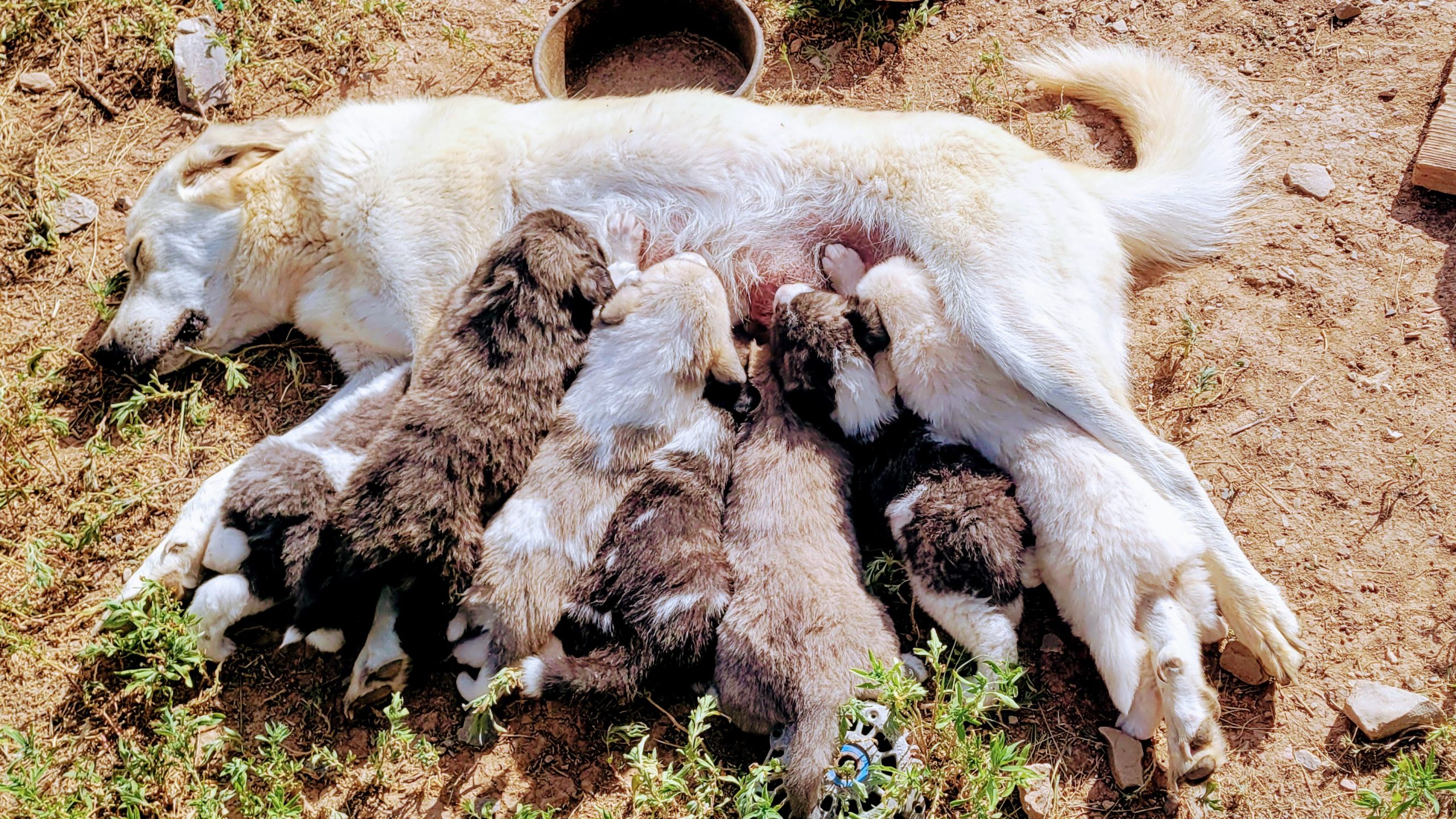

LGD Breeding and Whelping
Evidence-based practices for planning, pregnancy, delivery, and early puppy care
Breeding and whelping livestock guardian dogs (LGDs) is equal parts genetics, management, and preparedness. Even with excellent planning, real-world reproduction rarely follows a perfect “textbook” schedule, so ethical breeders focus on reducing risk, maintaining accurate records, and preparing for complications.
This page provides a practical framework grounded in veterinary theriogenology guidance, university veterinary resources, major registry/breed-education materials, and peer-reviewed reproductive research.
1) Before You Breed: Readiness, Records, and Risk Reduction
Set breeding goals that fit working LGDs
Ethical LGD breeding should be purpose-driven: preserving functional guarding traits, stable temperament, physical durability, and long-term welfare. Broad breeder education materials emphasize “breed to improve,” avoid “kennel blindness,” and plan intentionally rather than breeding opportunistically.
Track the female’s cycle (do not guess)
Textbooks often describe “typical” cycles, but individual variation is common. Keep a written heat record:
- First day you notice vulvar swelling or discharge
- Behavioral changes and male interest
- Standing heat (receptivity) timing
- Length of the cycle and interval between cycles
Good records reduce missed breedings and unnecessary travel or boarding.
Pre-breeding veterinary checks
Before breeding, plan a pre-breeding exam and discuss:
- Vaccination timing (avoid unnecessary stress during pregnancy)
- Parasite control strategy appropriate for working dogs
- Reproductive disease screening as advised by your veterinarian
- Nutrition plan and body condition target (lean, athletic condition is generally preferred)
2) Timing the Breeding: Natural Breeding and AI
Why timing is not “Day 11” for every dog
Ovulation timing varies. University and breeder-education resources emphasize that accurate timing is best achieved through hormone monitoring rather than calendar assumptions.
Key physiology:
- Ovulation occurs about 2 days after the LH surge (commonly described as Day 2 post-LH).
- Canine oocytes require a maturation period after ovulation; the most fertile window is typically several days after the LH surge.
- Sperm can remain capable of fertilization for multiple days, so natural breeding windows are broader than many people assume.
Progesterone testing (and when it matters most)
If you must travel to a stud, coordinate shipment, or use artificial insemination, progesterone testing is a standard approach to improve timing accuracy. AKC breeder-education materials discuss progesterone testing and ovulation timing as core tools for improving the odds of conception.
Artificial insemination (AI)
AI can be appropriate when used responsibly (e.g., distance, injury prevention, stud availability, semen preservation), but it typically requires tighter timing control and veterinary coordination.
3) Determining Pregnancy: What Works and When
No single method is perfect for every scenario. Timing accuracy is best when you know the approximate day of the LH surge/ovulation.
Palpation
Veterinary palpation can be useful around day ~28 (timing varies by clinician skill and dam body condition). Many veterinary resources recommend a day range in the late-20s for best success.
Relaxin blood testing
Relaxin is a pregnancy-associated hormone in dogs. Peer-reviewed work shows pregnancy detection by relaxin testing can occur roughly day 19–28 after the LH surge (average mid-20s).
Ultrasound
Ultrasound can confirm pregnancy from about day 28 onward, but it is not a reliable method for counting the exact number of puppies.
Radiographs (X-ray)
Radiographs are used later in pregnancy—commonly around ~55 days—to estimate litter size and help confirm when whelping is complete.
4) Nutrition During Pregnancy: Do More Later, Not Earlier
A common evidence-based principle is avoiding major diet increases early; most fetal growth occurs later in gestation.
Feeding approach
- Maintain a stable, high-quality diet during early pregnancy.
- Increase caloric intake in the last third of pregnancy as the dam’s needs rise and abdominal space decreases (smaller, more frequent meals often work best).
- Maintain a lean but well-muscled body condition (obesity increases dystocia risk and reduces stamina).
Calcium supplementation caution (important)
Veterinary references warn that oral calcium supplementation during pregnancy can predispose dogs to eclampsia (hypocalcemia) during peak lactation, due to downregulation of calcium regulatory systems. Your veterinarian should guide any supplementation decisions.
5) Predicting the Due Date: What is “Normal”?
Gestation length
A widely referenced benchmark is ~63 days from ovulation (or ~65 days from LH surge), but there is natural variation. University theriogenology resources and recent clinical reviews support these averages.
Temperature drop and progesterone decline
Many bitches show a measurable temperature drop prior to labor. University guidance notes:
- A rectal temperature decrease (often <99°F) can occur within ~24 hours of parturition, though it is not always detected.
- A veterinary teaching hospital resource reports a common drop to ~97–98°F in many dogs and links it to progesterone falling below a low threshold shortly before labor.
Practical note: ear thermometers can show trends, but rectal temperature is generally considered the reference standard in veterinary guidance.
6) Whelping Preparation: Set Up Early, Expect the Unexpected
Whelping area essentials
Plan a clean, draft-free, easily disinfected whelping area that allows the dam to move comfortably and safely.
AKC guidance emphasizes appropriate whelping boxes and safe bedding that provides traction and is easy to clean; avoid materials that can irritate eyes/skin or allow puppies to become trapped or smothered.
Minimum supply list (field-practical)
- Thermometer
- Clean towels and disposable pads/newspaper
- Sterile gloves and lubricant
- Hemostats, blunt scissors, dental floss/umbilical ties
- Suction bulb
- Scale and record sheet for birth weights and notes
- Vet and emergency clinic contact numbers
- Transport plan (vehicle readiness, route, after-hours options)
7) Normal Stages of Labor: What to Expect
University resources describe normal parturition in stages, including:
- Stage I: Restlessness, nesting, panting, cervical dilation
- Stage II: Active contractions and delivery of puppies
- Stage III: Passage of placentas (often interspersed with deliveries)
For a clear overview and red flags, Cornell’s normal whelping resource is a practical reference for breeders.
8) Dystocia (Difficult Birth): Red Flags and Response
Dystocia can be caused by uterine inertia, obstruction, fetal malposition, maternal exhaustion, or metabolic issues.
Veterinary references note uterine inertia as a common cause and identify contributors such as low calcium or blood glucose, illness, litter-size factors, exhaustion, and stress.
Call your veterinarian urgently if:
- Strong contractions persist without a puppy progressing
- A puppy or fluid sac is visible with no progress
- Prolonged gaps between puppies with active straining
- Green/black discharge before the first puppy (can indicate placental separation)
- The dam becomes weak, collapses, or shows severe pain
- Suspected stuck puppy, abnormal presentation, or excessive bleeding
If you are unsure, treat it as urgent; delays can cost the dam and litter.
9) Immediate Post-Whelping Care: First 24–72 Hours
Dam
- Monitor temperature, appetite, hydration, and behavior
- Expect normal post-partum discharge within reason; foul odor, fever, or lethargy warrants veterinary evaluation
- Watch for signs of hypocalcemia during nursing (restlessness, tremors, panting, stiffness)
Puppies
- Ensure each puppy nurses within the first hours
- Record birth weights and monitor daily; weight trends matter more than single readings
- Keep the environment warm, dry, and draft-free
Purdue Extension notes that puppies may lose weight in the first 24 hours, but then should trend upward with adequate nursing and warmth.
10) Records and Registry Documentation
Accurate records protect breeders, buyers, and dogs. UKC policy materials explicitly emphasize keeping records including stud service documents, pedigrees, litter production, breeding and whelp dates, and puppy sales documentation.
UKC also provides litter registration pathways and breeder resources that reinforce recordkeeping expectations.
Practical Takeaways for LGD Operations
- Use cycle records plus progesterone testing when timing is critical.
- Confirm pregnancy with an appropriate method at an appropriate time (relaxin, ultrasound, radiographs).
- Avoid routine calcium supplementation during pregnancy unless your veterinarian directs it.
- Prepare for dystocia and have an after-hours emergency plan.
- Keep meticulous breeding, whelping, and puppy records.