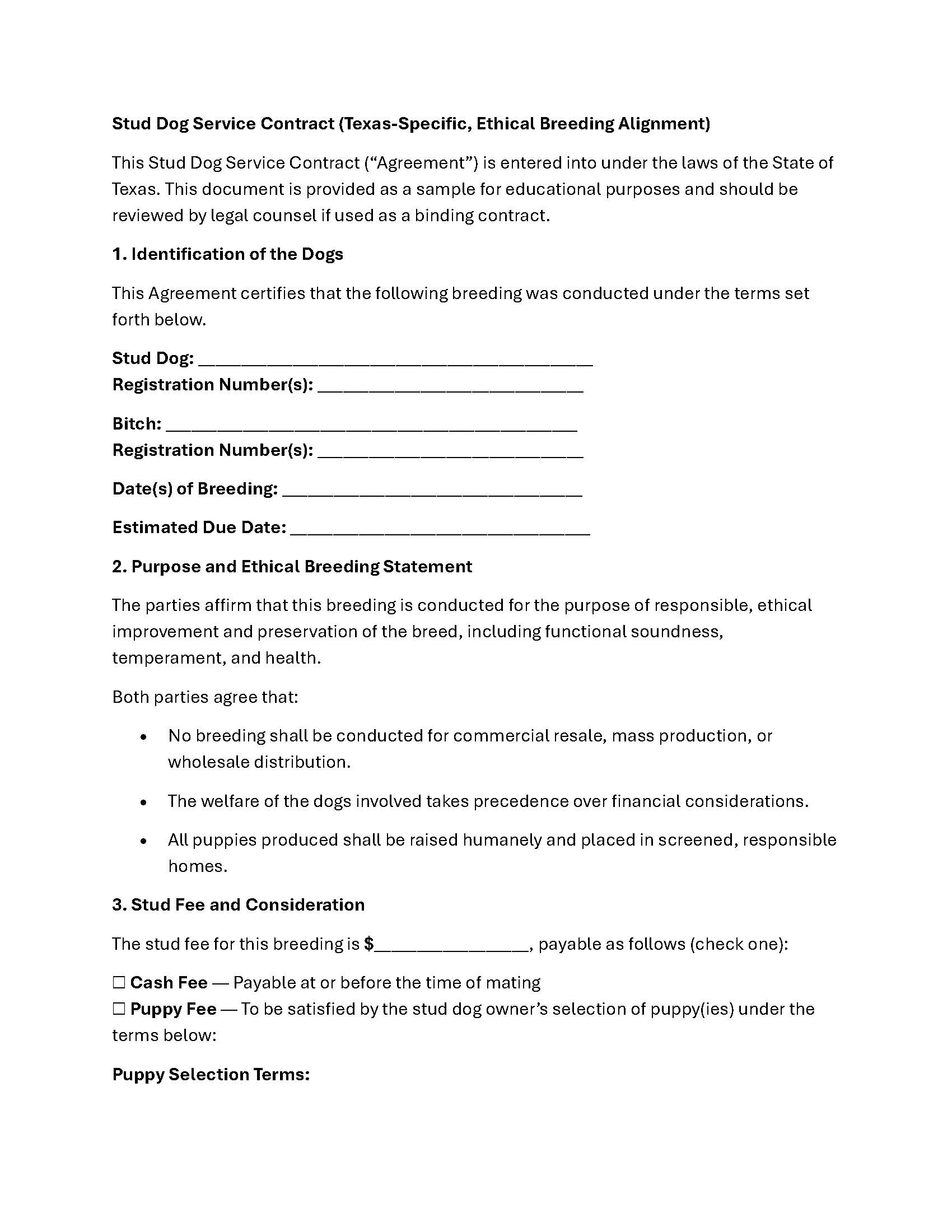
Stud Dog Hints and Tips
Responsible Use of the Male in Breeding Programs
Using a stud dog responsibly carries significant influence over the future of a breed. Because a single male can sire many litters, his genetic, health, and temperament traits may be amplified far beyond those of any individual bitch. This makes thoughtful preparation, transparency, and follow-through essential for stud dog owners. The following guidance reflects best practices drawn from university veterinary recommendations, national kennel organizations, and long-standing breeder experience.
- Prioritize Comprehensive Health Testing
Health testing is the foundation of ethical stud dog use. Because stud dogs may contribute to many litters, their health status has outsized importance in managing heritable disease risk.
Recommended baseline testing commonly includes:
- Orthopedic screening (OFA or PennHIP) to assess hip health
- Genetic testing for breed-relevant conditions (e.g., MDR1, CEA, PRA, or other inherited disorders)
- Ophthalmologic evaluation by a veterinary eye specialist
- Brucellosis testing, an essential infectious disease screen that affects fertility and can be transmitted during breeding
The financial cost of testing is often offset by a single stud fee, while the value to the breed is long-term. Providing complete, current test results allows bitch owners to make informed pairing decisions and demonstrates professionalism and transparency.
- Objectively Evaluate Temperament, Structure, and Working Ability
A stud dog should be evaluated honestly. Owners are often proud of their dogs, and rightly so, but breeding decisions must be grounded in objective assessment.
Consider:
- Temperament under real-world conditions (novelty, stress, handling, recovery)
- Structural soundness and movement, not just appearance
- Working ability or functional performance, where applicable (livestock work, obedience, sport, service, or other tasks)
Formal evaluations, whether working trait assessments, sport titles, or independent third-party critiques, provide valuable perspective. Equally important is understanding the dog’s limitations, not just his strengths. No stud dog should be expected to “fix” weaknesses in a bitch; breeding is about complementarity, not compensation.
- Prepare to Host the Breeding Bitch and Owner
Natural breeding’s often involve a 1–3 day fertile window, during which close supervision is required. Stud dog owners should be prepared to clear their schedules, regardless of weather or inconvenience.
Bitch owners may have traveled long distances and will appreciate:
- Clear communication about expectations and timelines
- A calm, low-stress environment for the dogs
- Practical assistance such as local lodging or food recommendations
Some dogs proceed quickly to breeding; others require time for acclimation and courtship. Travel stress, unfamiliar environments, and handler tension can all affect success. Patience and professionalism go a long way.
- Decide in Advance Whether You Will Board a Bitch
Some stud dog owners choose to board visiting bitches for several days to cover the breeding window. This option should be carefully considered and clearly defined in advance.
If boarding is offered:
- Secure, safe, and comfortable housing is essential
- Strict supervision is non-negotiable
- Stress reduction should be a priority
- Feeding, exercise, and sanitation routines should be discussed
Boarding involves time, labor, and liability. Any associated fees should be transparent and separate from the stud fee itself.
- Expect the Unexpected and Plan Accordingly
Even with excellent timing and compatible dogs, natural breeding’s do not always succeed. Responsible stud dog owners plan ahead.
Best practice includes:
- Establishing a relationship with a veterinarian experienced in reproductive work
- Discussing contingency plans such as artificial insemination (AI), if acceptable to both parties
- Communicating expectations clearly before the breeding takes place
Advance planning reduces stress and allows informed decisions if circumstances change.
- Be a Long-Term Partner, Not Just a Stud Service
Ethical stud dog ownership does not end when the breeding is complete. Whelping, raising, and placing a litter is demanding work, and support from the stud owner can be invaluable.
Meaningful involvement may include:
- Assisting with puppy evaluation and placement discussions
- Providing honest feedback about the stud dog’s traits and tendencies
- Remaining available for consultation as puppies mature
Maintaining communication with puppy owners, when appropriate, helps stud owners understand what their dog is consistently producing. Over time, this feedback loop is critical for refining breeding decisions and improving outcomes.
- Think in Terms of the Breed, Not the Individual Dog
Perhaps the most important principle is perspective. A stud dog may be an outstanding individual and still be used sparingly, or not at all, if his traits are already well represented or if his weaknesses pose population-level risks.
Responsible stud dog owners ask:
- What does my dog add to the breed?
- What does he reliably pass on?
- How frequently should he be used to avoid overrepresentation?
Restraint is often as important as enthusiasm.
Closing Thoughts
Stud dog ownership is not passive. It requires planning, education, transparency, and a willingness to take responsibility for long-term consequences. When approached thoughtfully, a stud dog can make a positive, lasting contribution to his breed. When approached casually, the same dog can unintentionally magnify problems.
Ethical breeding begins with informed choices, and stud dog owners play a central role in that process.