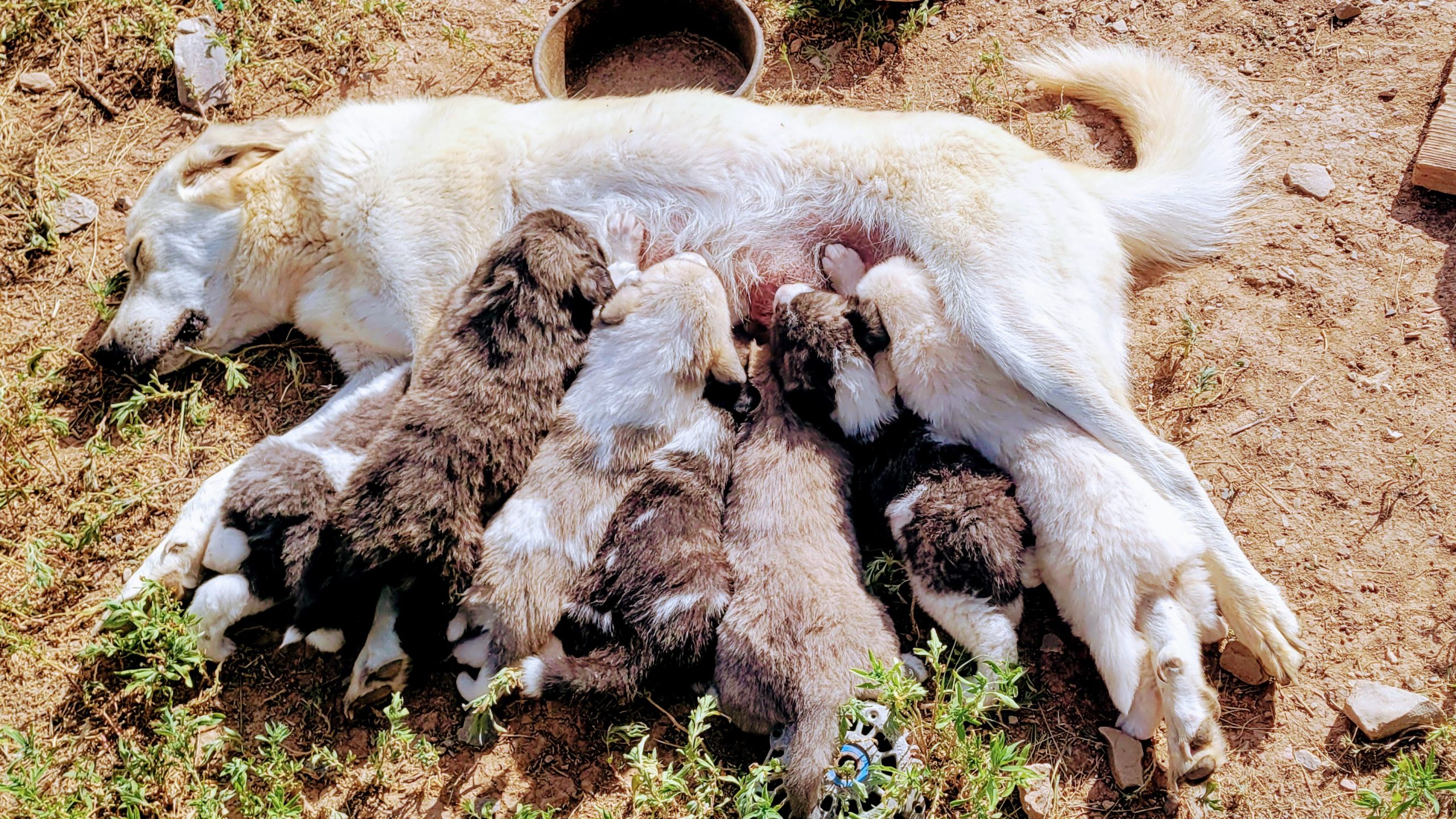

How to Evaluate a Puppy
How to Evaluate a Puppy (7–10 Weeks)
Why puppy evaluation matters (and what it can’t do)
At roughly 7–10 weeks, many puppies show stable, observable “default responses” to novelty, handling, and recovery from startle. Those early tendencies can help you predict what kind of adult dog the puppy is most likely to become, and what kind of training and socialization (“software”) you will need to install.
However, evaluation is not fortune-telling. Early temperament interacts with health, development, environment, learning history, and ongoing socialization. A puppy with excellent “hardwiring” can be undermined by poor socialization or chronic stress. Likewise, even strong socialization cannot reliably “fix” a genetically weak temperament. The practical goal is not to select a “perfect puppy,” but to match the right puppy to the right job and home and then follow through with appropriate training and management.
A major takeaway from veterinary behavior guidance is that socialization should not be postponed until a full vaccine series is complete. With common-sense precautions, clean environments, controlled exposure, and avoidance of high-risk dog-traffic areas, the behavioral risk of under-socialization is often greater than the infectious-disease risk.
Use evaluation for one thing: match the puppy to the purpose and the handler’s realities.
Set up a fair evaluation
A fair assessment depends on controlling the variables that can distort what you see.
- Age window: 7–10 weeks is a common “first structured look.” If possible, observe the same puppy on more than one day.
- State matters: Overtired, hungry, overheated, or overstimulated puppies will appear either worse (shut-down) or “wilder” than normal.
- Novel environment: Use an area the litter doesn’t spend time in daily (a different pen, clean outbuilding, quiet yard zone).
- Neutral people: Include at least one unfamiliar but calm adult. New stimuli reveal real defaults.
- Short sessions: 5–12 minutes per puppy is plenty. Stop before stress piles up.
- Repeatability: One moment can mislead you. Patterns across repeated exposures are what matter.
Common buyer mistake: Getting on the floor immediately and letting the boldest puppy “pick you.” High-initiative puppies often look the most charming in the puppy pile, but that does not automatically mean “best fit.”
The Big 5 Traits to Evaluate
1) Response to novelty (confidence + thoughtfulness)
Place the puppy gently in the center of a new area and step back. Watch the first 30–90 seconds.
Common patterns
- Preferred pattern (many homes and jobs): brief caution → looks/sniffs → begins exploring → confidence builds over seconds.
This shows awareness without being overwhelmed and a healthy ability to adapt. - More fragile pattern: prolonged crouch, wall-hugging, hiding, slow recovery.
These puppies may need extensive, careful socialization and may be less suited for highly stimulating environments. - Overdriven pattern: instantly charges, grabs, ignores feedback.
These puppies can be “bombproof,” but are often more impulsive and harder to manage without strong structure.
The goal is not “bold at all costs.” The goal is good judgment and recovery.
2) Startle + recovery (“bounce-back”)
After the puppy is exploring, create a mild startle behind the puppy (for example, toss a set of keys or lightly drop a metal object 2–3 feet away). You are not scoring the startle itself—you are scoring the recovery.
What you want to see
- Preferred: startles → reorients → investigates → decides it’s not a threat → resumes exploring.
- Concern: startles → retreats and refuses to investigate; prolonged fear or shutdown.
- Also not ideal: startles → immediately attacks/grabs the object with frantic intensity (impulse-control challenges).
In real work settings (ranches, stock handling, storms, equipment noise), you want a dog that can startle and still recover quickly.
3) Human orientation (engagement without dependence)
While the puppy explores, see whether it can disengage from the environment and choose you.
What it looks like
- Green flag: explores → checks in → comes for brief interaction → returns to exploring.
This is often an excellent “balance” profile: independent enough to work, engaged enough to train. - Yellow flag: ignores people entirely and will not check in. This can work for some roles, but may be harder for obedience, public life, or handler-directed work.
- Red flag: frantic clinging or panic when you step away. This may signal low resilience or poor coping skills.
4) Handling tolerance (restraint + composure)
Gently pick up the puppy and briefly hold it on its back (a calm, controlled “baby hold”). Watch the response.
What you’re evaluating
- Does the puppy protest briefly and then settle?
- Does it make eye contact and accept soothing contact?
- Does it escalate into panic, thrashing, or repeated hard biting?
This is not about dominance. It is a practical look at how the puppy responds to mild constraints and human direction, which is important for vet care, grooming, emergencies, travel, and daily management.
5) Social style with littermates (assertive vs. bully vs. soft)
Watch the litter first, before touching anything. You are looking for a consistent social style.
Profiles
- Appropriately assertive: confident, can win space/resources, but disengages and re-engages without grudges.
- Bully pattern: repeatedly targets the same littermates, escalates, or “guards” people/toys with intensity.
- Overly soft: repeatedly displaced and stays displaced; may struggle in competitive environments without careful support.
Early dog-dog learning matters. Puppies learn bite inhibition, play rules, and social cues in the litter. Lack of appropriate early dog-dog experience can cause long-term problems.
Match the puppy to the purpose
Working ranch / high-demand environments
Look for:
- Strong recovery from startle
- Thoughtful curiosity (not reckless)
- Stable nerve under novelty
- Engagement with the handler without being clingy
Suburban pet/family companion
Look for:
- Moderate curiosity with friendly sociability
- Lower reactivity to novelty and sound
- Easy handling tolerance
- Quick warm-up to strangers (without suspicion)
Future breeding prospect (temperament focus)
Look for:
- Stable, repeatable resilience across multiple days
- Predictable recovery + good judgment
- Social stability with dogs and humans
- No chronic fearfulness or chronic impulsivity as the default
High-drive sport or detection-style work
Look for:
- High initiative paired with “thinking drive,” not frantic drive
- Clean startle recovery
- A profile that can accept structure and develop impulse control
Red flags that deserve a hard pause
- Persistent shutdown in novelty with little recovery over repeated attempts
- Persistent extreme reactivity (fear or arousal) that does not settle with calm time
- Handling aggression beyond normal puppy protesting (repeated hard biting, escalating intensity)
- Intense, repeatable resource guarding at this age
- Health concerns that confound temperament (poor body condition, chronic diarrhea, persistent coughing, abnormal gait, lethargy)
If a puppy shows red flags, it does not automatically mean the puppy is “bad”, but it may be a poor match for many homes or require a very specific handler.
Questions to ask the breeder (as important as the “test”)
- What are the parents like in daily life, with strangers, livestock, storms, travel, and vet handling?
- What has this litter already experienced for socialization, noise, surfaces, handling, and problem-solving?
- How do you handle fear periods and novelty exposure?
- Any known behavioral trends in the line (noise sensitivity, dog aggression, roaming, guarding intensity)?
- What is your take-back policy if the fit is wrong?
Practical note on “vaccines vs. socialization.”
Modern veterinary behavior guidance supports early, controlled social exposure rather than delaying all outings until the full vaccine series is complete. The key is smart risk management: clean environments, healthy, known dogs, disinfected indoor puppy classes, and avoidance of high-risk areas (dog parks, shelter traffic, and unknown-dog congregation points). Your veterinarian can advise you based on local disease prevalence.
Simple scorecard you can use on-site
Score each domain 1–5 and write short notes. If possible, repeat on two different days.
- Novelty response: caution → explore → confidence
- Startle recovery: startle → investigate → dismiss
- Human engagement: checks in + accepts direction
- Handling tolerance: brief protest → settles
- Social style: assertive and fair; not bullying
Patterns are more meaningful than any single score.
Disclaimer
This page is for educational purposes and does not replace veterinary or veterinary behavior advice. If you have concerns about a puppy’s health or behavior, consult a qualified veterinarian and/or a credentialed behavior professional.