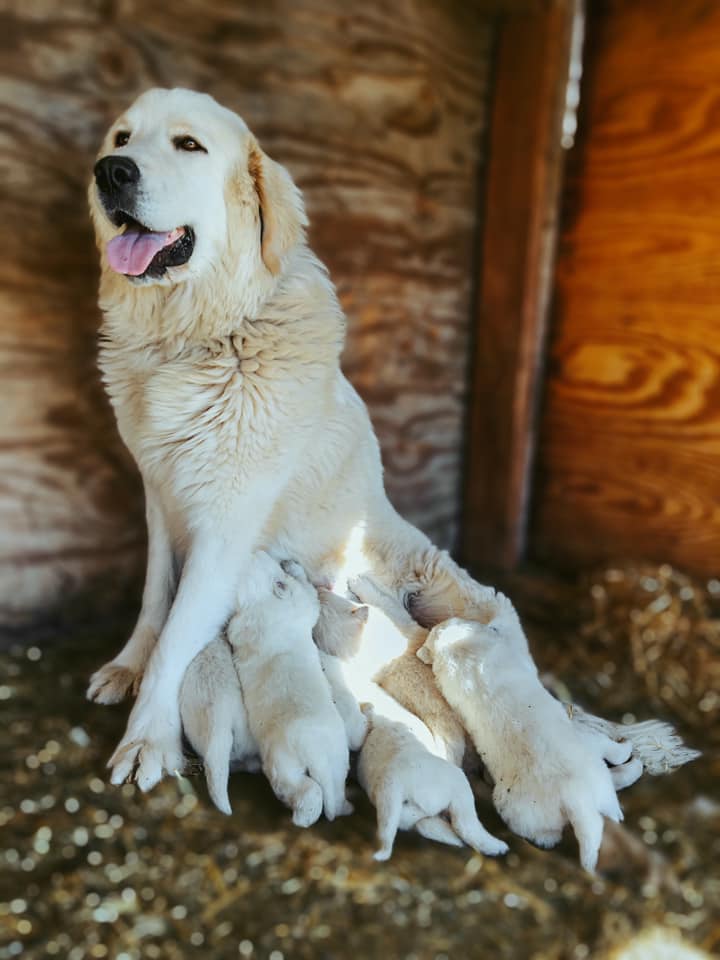

Neonatal Puppy Care for LGDs
(0–8 Weeks)
Science-backed protocols, timelines, and common failure points
Early-life management determines whether livestock guardian dog (LGD) puppies develop into healthy, stable, working adults. The neonatal and early socialization periods are biologically sensitive windows in which nutrition, thermoregulation, disease prevention, and appropriate exposure have outsized effects on survival, growth, behavior, and long-term performance.
This companion page outlines evidence-based care practices from birth through eight weeks, with emphasis on conditions commonly encountered in working-dog environments and the most frequent causes of preventable losses.
OVERVIEW: DEVELOPMENTAL STAGES
- Neonatal period: Birth–2 weeks (eyes/ears closed; limited mobility)
- Transitional period: 2–3 weeks (eyes/ears open; first standing/walking)
- Early socialization: 3–6 weeks (rapid brain development; learning begins)
- Late socialization / pre-placement: 6–8 weeks (independence increases)
Each stage has distinct biological needs. Applying the wrong management at the wrong time is a common source of failure.
0–2 WEEKS: NEONATAL PERIOD
Core priorities
- Warmth
- Colostrum intake
- Hydration and nursing
- Infection prevention
- Daily monitoring
Temperature & environment
Newborn puppies cannot regulate body temperature.
- Target ambient temperature:
- Week 1: ~85–90°F (29–32°C)
- Week 2: ~80–85°F (27–29°C)
- Use indirect heat (heat lamps with a safe distance, warming pads under half the box).
- Avoid drafts and moisture.
Failure point: Hypothermia → suppressed nursing → hypoglycemia → death.
Colostrum & nursing
- Puppies must nurse within the first 12–24 hours to absorb maternal antibodies.
- Weak or displaced puppies should be assisted to nurse.
- Observe teats to ensure all pups are nursing effectively.
Failure point: Missed colostrum window → failure of passive transfer → high mortality from infection.
Monitoring & records
- Weigh puppies daily at the same time.
- Normal pattern:
- Possible slight loss in the first 24 hours
- Then steady daily gain
- Any puppy not gaining weight for 24 hours needs immediate intervention.
Failure point: “Wait and see” delays with fading puppies.
2–3 WEEKS: TRANSITIONAL PERIOD
Developmental changes
- Eyes open (~10–14 days)
- Ears open (~14–18 days)
- Puppies begin standing and toddling
- Thermoregulation improves but is not complete
Management focus
- Gradually reduce supplemental heat
- Keep bedding clean and dry
- Begin gentle human handling (brief, calm, predictable)
Failure point: Excessive handling or environmental stress before puppies are neurologically ready.
3–4 WEEKS: BEGINNING OF SOCIAL LEARNING
This is one of the most critical windows in canine development.
Introduction to solid food
- Begin offering a soft gruel (high-quality puppy food soaked in warm water)
- Puppies should still nurse freely
- Feed in shallow pans to prevent aspiration
Failure point: Abrupt weaning or nutritionally poor diets → diarrhea, poor growth.
Early neurological stimulation
Short, controlled exposure improves stress tolerance later in life.
- Gentle handling
- Mild environmental variation (different surfaces, sounds)
- Brief separations from the dam
These exposures should be short, positive, and non-threatening.
4–6 WEEKS: EARLY SOCIALIZATION PERIOD
Behavioral development
- Puppies begin learning species identity, social rules, and environmental cues.
- This period shapes confidence, adaptability, and stress response.
LGD-specific exposure
- Puppies should have controlled exposure to livestock while still living with the dam.
- Allow observation and calm proximity, not unsupervised interaction.
- Maintain strong litter cohesion and dam presence.
Failure point: Removing puppies from livestock too early or raising them in isolation from stock.
Health management
- Begin deworming protocol as advised by a veterinarian.
- Monitor closely for:
- Diarrhea
- Lethargy
- Dehydration
- Poor coat or bloating
6–8 WEEKS: PRE-PLACEMENT PERIOD
Independence increases
- Puppies eat solid food consistently
- Nursing decreases naturally
- Puppies explore, play, and test boundaries
Continued socialization
- Exposure to:
- Livestock routines
- Ranch sounds and movement
- Different people (calm, neutral interactions)
- Avoid overwhelming stimuli or chaotic environments.
Failure point: Over-socializing with people at the expense of livestock bonding.
Health & readiness checks
Before placement:
- Puppies should be:
- Bright, alert, and active
- Consistently gaining weight
- Free of obvious lameness or congenital defects
- Vaccination timing should follow veterinary guidance appropriate for working dogs.
COMMON FAILURE POINTS (AND HOW TO PREVENT THEM)
|
Failure Point |
Consequence |
Prevention |
|
Hypothermia |
Fading puppy syndrome |
Proper heat management |
|
Poor colostrum intake |
Infection, mortality |
Early nursing checks |
|
Inadequate monitoring |
Missed illness |
Daily weights & logs |
|
Abrupt weaning |
GI disease |
Gradual transition |
|
No livestock exposure |
Poor bonding |
Controlled early exposure |
|
Excess human socialization |
Reduced guarding focus |
Balanced interaction |
|
Poor sanitation |
Disease spread |
Clean, dry environment |
KEY PRINCIPLES FOR LGD NEONATAL SUCCESS
- Management, not genetics, causes most early losses
- Consistency beats intensity
- Early problems compound rapidly
- Good records save puppies
- Livestock exposure must be intentional, not accidental
FINAL THOUGHT
Neonatal care is not glamorous, but it is foundational. LGDs that survive and thrive through their first eight weeks with proper warmth, nutrition, exposure, and oversight are far more likely to mature into reliable, effective working dogs, reducing future behavior problems, rehoming risk, and welfare concerns.